
Grid‑tied solar PV
Cut the bill your daytime load is creating.
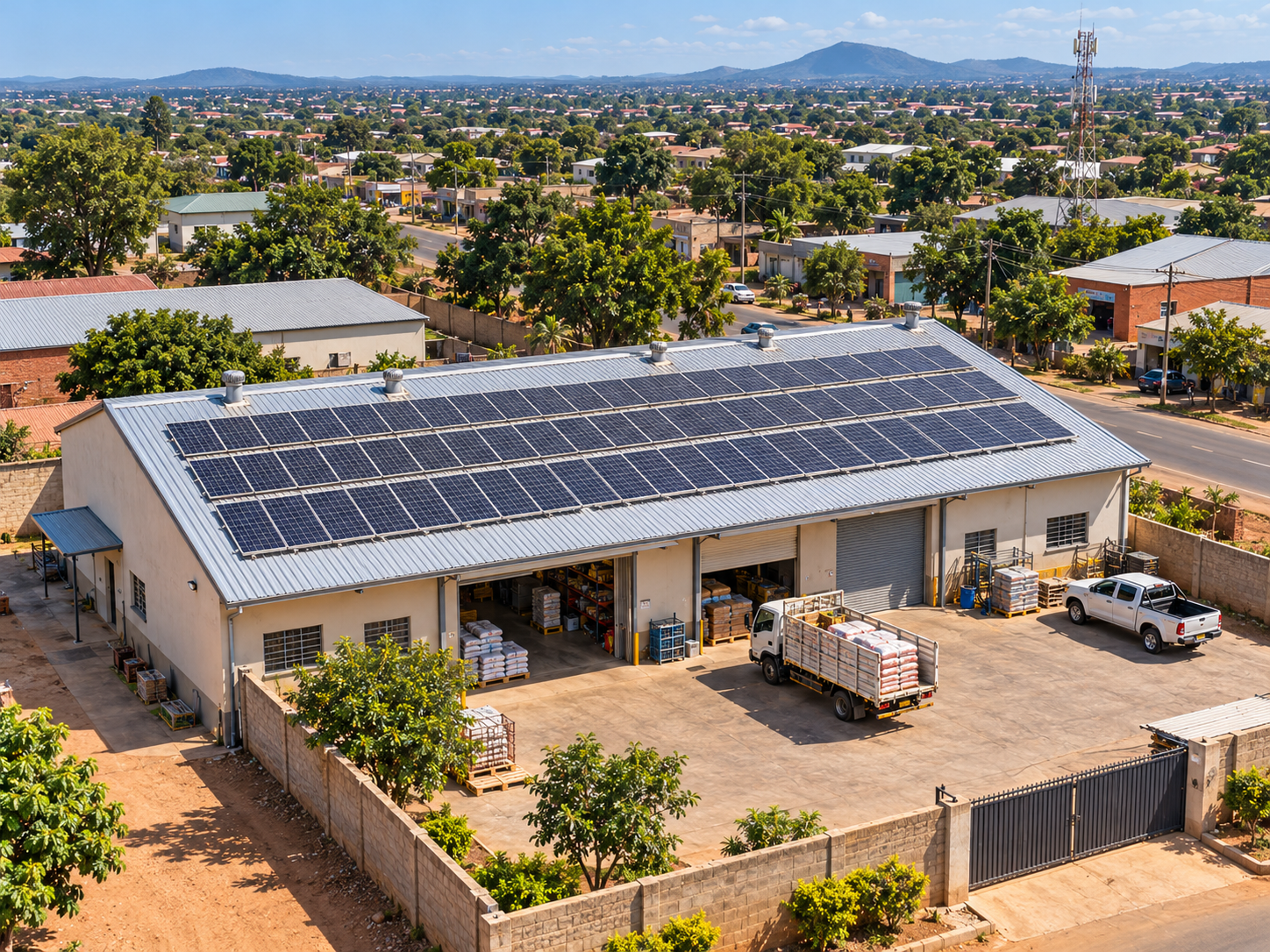
For sites with usable mains supply and heavy consumption while the sun is up: solar generation runs your daytime load, and you draw from the grid only for what's left.
Assessment and design first. Nothing supplied before you agree it.
The situation now
The bill grows every year and nobody can say which load is causing it
You pay for every daytime unit
Offices, pumps, cold rooms and machines run hardest at the sunniest hours — the most expensive way to run a site with a roof standing empty.
Nobody measured before quoting
A panel count is proposed without knowing your daytime profile, so the array is either too small to matter or bigger than your load can use.
Savings were promised, not calculated
Without measured consumption there is no honest figure for what the system will actually displace.
The real problem isn't the tariff. It's that no one has measured what your site consumes, hour by hour, so every decision after that is a guess.
How this system gets there
From measured consumption to generation you can see on the meter
Step 1
We measure your daytime load
An energy audit establishes what runs, when it runs and how much it draws — the basis for every figure that follows.
Step 2
We size the array to that profile
Generation is matched to the load it is meant to displace, not to the roof area or a package size.
Step 3
You see the design before you pay
The proposal shows the array, the inverter, the expected generation and how it lands against your consumption.
Step 4
We install, commission and stay
Our team does the installation and commissioning and supports the system afterwards — no handover to a third party.
Not sure yet?
That's normal. A power system is a big investment, so here are the questions clients ask most before they commit, and what we do about each one.
You might be thinking
“Will it actually reduce our bill?”
What we do
The figure comes from your own consumption data
We quote expected generation against measured load, so you can check the arithmetic before committing.
You might be thinking
“What happens when the grid goes down?”
What we do
Grid‑tied is for savings, not backup — we'll say so
If you need the site to keep running through outages, we'll propose hybrid with storage instead.
You might be thinking
“Will it disrupt operations to install?”
What we do
The works are scheduled around your site
Installation sequence and shutdown windows are agreed with you before the schedule is set.
Start with the loads that run while the sun is up
Send us the equipment that runs during the day and your recent bills. We measure, design the array around that load and come back with a proposal and a quote.
Often considered alongside
Start with the list of what you need to keep running
Send us the equipment and how long you need it to run without mains power. We do the load assessment, design the system and come back to you with a proposal and a quote.