
Books structured your way — and closed properly.
Your chart of accounts, journals for everything the cycles do not post automatically, and an audit trail behind every figure. This is the part that makes every other figure trustworthy.
Free while you migrate. Your own chart of accounts. No credit card.
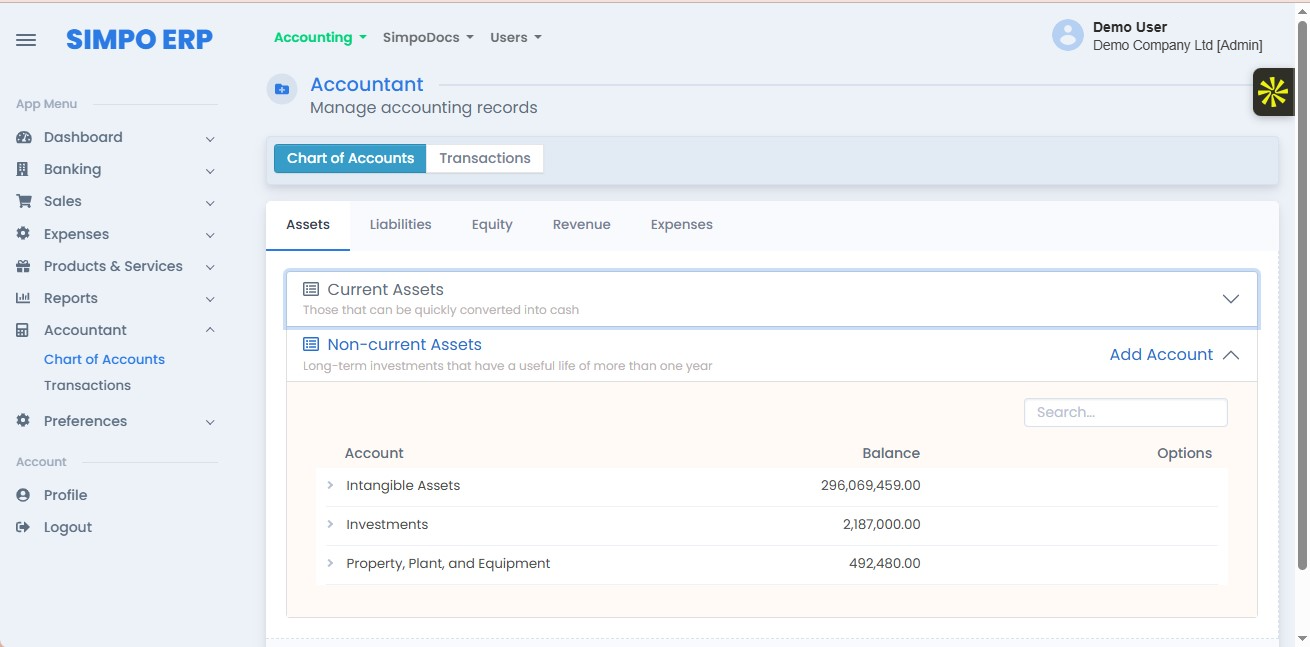
The chart of accounts every entry posts to.
The current way
A report is only as good as the ledger behind it
Most small‑business books cannot survive a question. There is no structure, no entry to trace, and last month changes every time somebody opens the file.
Current way
Categories were invented as they were needed.
Consequence
Similar costs sit in three different places, so no report is comparable.
Bigger problem
You cannot see which part of the business earns and which part consumes.
Current way
Corrections are typed over the original figures.
Consequence
Last month's reported result quietly changes after it was reported.
Bigger problem
Nobody trusts a figure once they have seen it move.
Current way
Accruals, depreciation and opening balances are done by the accountant, once a year.
Consequence
Eleven months of management figures are wrong in a known direction.
Bigger problem
You manage on figures you already know are misleading.
How it works with M‑Accounting instead
One ledger, structured and traceable
Every transaction in every subsystem posts to accounts you defined, with a trail back to its source.
Set up
Your chart of accounts, not a generic one
We load the account structure your finance team and auditors already use.
Your accounts
Auditor‑ready
Result
Reports come out in the shape you already report in.
Eliminate
No typing over history
Corrections are journals with a reason and an author, not edits. The original entry stays, and the correction is visible.
Journals, not edits
Reason recorded
Author recorded
Result
Figures stop changing behind people's backs.
Output
Every figure traceable
Drill from any line in any statement to the journal, invoice, receipt, bill or payment that produced it.
Drill to source
Full audit trail
One ledger
Result
Audit questions are answered on the screen.
Worried about your books?
It's the part your accountant judges you on. Here's how M‑Accounting works with their chart of accounts and their way of closing.
You might be thinking
“Our accountant has their own chart of accounts.”
What we do
We use theirs.
Bring their structure and codes and we load them, with your accountant in the setup if you want them there.
Chart of accounts configured with your accountant.
You might be thinking
“Our spreadsheet is the only record we have.”
What we do
A spreadsheet is enough to start from.
Upload balances and open items in whatever format they exist and confirm the opening position — anything that does not add up is flagged before go‑live.
Opening‑balance agreement included.
You might be thinking
“We report in an unusual way.”
What we do
The structure bends to you.
Branches, projects, funds, departments — reporting dimensions are set up to match how you are actually held accountable, and modules are added on request.
Customisation on request.
Start from books that will hold up
Start free, load your own chart of accounts and opening balances, and close a real period before you pay anything.
Free while you migrate. Your own chart of accounts. No credit card.
Click anywhere or press Esc to close